
README.md 16 KB
FMalloc
FMallocAnsi
使用 FMallocAnsi 分配内存时,根据平台不同,调用不同平台的内存申请函数 _aligned_malloc、memalign、malloc
void* FMallocAnsi::TryMalloc(SIZE_T Size, uint32 Alignment)
{
#if !UE_BUILD_SHIPPING
	uint64 LocalMaxSingleAlloc = MaxSingleAlloc.Load(EMemoryOrder::Relaxed);
	if (LocalMaxSingleAlloc != 0 && Size > LocalMaxSingleAlloc)
	{
		return nullptr;
	}
#endif

	Alignment = FMath::Max(Size >= 16 ? (uint32)16 : (uint32)8, Alignment);

	void* Result = AnsiMalloc(Size, Alignment);

	return Result;
}

void* AnsiMalloc(SIZE_T Size, uint32 Alignment)
{
#if PLATFORM_USES__ALIGNED_MALLOC
	void* Result = _aligned_malloc( Size, Alignment );
#elif PLATFORM_USE_ANSI_POSIX_MALLOC
	void* Result;
	if (UNLIKELY(posix_memalign(&Result, Alignment, Size) != 0))
	{
		Result = nullptr;
	}
#elif PLATFORM_USE_ANSI_MEMALIGN
	void* Result = memalign(Alignment, Size);
#else
	void* Ptr = malloc(Size + Alignment + sizeof(void*) + sizeof(SIZE_T));
	void* Result = nullptr;
	if (Ptr)
	{
		Result = Align((uint8*)Ptr + sizeof(void*) + sizeof(SIZE_T), Alignment);
		 *((void**)((uint8*)Result - sizeof(void*))) = Ptr;
		*((SIZE_T*)((uint8*)Result - sizeof(void*) - sizeof(SIZE_T))) = Size;
	}
#endif

	return Result;
}
释放内存也是,根据平台不同调用不同的释放函数 _aligned_free、free
void AnsiFree(void* Ptr)
{
#if PLATFORM_USES__ALIGNED_MALLOC
	_aligned_free(Ptr);
#elif PLATFORM_USE_ANSI_POSIX_MALLOC || PLATFORM_USE_ANSI_MEMALIGN
	free(Ptr);
#else
	if (Ptr)
	{
		free(*((void**)((uint8*)Ptr - sizeof(void*))));
	}
#endif
}
FMallocBinned
FMallocBinned 将内存划分为固定大小的内存池(Pool)
- Small Blocks, 小内存块,大小从 16 ~ 32768
- Large Blocks,大内存块,大于 32768
对于更大的内存分配,直接使用 系统接口 进行分配
全局变量
对于 IOS 系统来说,页大小限制是 16kb,其他系统是 64kb
#if PLATFORM_IOS
#define PLAT_PAGE_SIZE_LIMIT 16384
#define PLAT_BINNED_ALLOC_POOLSIZE 16384
#define PLAT_SMALL_BLOCK_POOL_SIZE 256
#else
#define PLAT_PAGE_SIZE_LIMIT 65536
#define PLAT_BINNED_ALLOC_POOLSIZE 65536
#define PLAT_SMALL_BLOCK_POOL_SIZE 0
#endif //PLATFORM_IOS
/** Default alignment for binned allocator */
enum { DEFAULT_BINNED_ALLOCATOR_ALIGNMENT = sizeof(FFreeMem) };
static_assert(DEFAULT_BINNED_ALLOCATOR_ALIGNMENT == 16, "Default alignment should be 16 bytes");
enum { PAGE_SIZE_LIMIT = PLAT_PAGE_SIZE_LIMIT };
// BINNED_ALLOC_POOL_SIZE can be increased beyond 64k to cause binned malloc to allocate
// the small size bins in bigger chunks. If OS Allocation is slow, increasing
// this number *may* help performance but YMMV.
enum { BINNED_ALLOC_POOL_SIZE = PLAT_BINNED_ALLOC_POOLSIZE };
// On IOS can push small allocs in to a pre-allocated small block pool
enum { SMALL_BLOCK_POOL_SIZE = PLAT_SMALL_BLOCK_POOL_SIZE };
// Counts.
enum { POOL_COUNT = 41 };

/** Maximum allocation for the pooled allocator */
enum { EXTENDED_PAGE_POOL_ALLOCATION_COUNT = 2 };
enum { MAX_POOLED_ALLOCATION_SIZE   = 32768+1 };
构造函数
根据 PageSize 初始化运算参数
PageSize指的是操作系统内存页大小,通常是 4KB 或者 64KBAddressLimit指的是地址空间上限,如 32位系统为 4GB
| 参数 | 作用 | 页大小 64 KB 时取值 |
|---|---|---|
| PoolBitShift | 页大小对数 | 16 |
| IndirectPoolBlockSize | 每页能存储的 FPoolInfo 数量 |
2048 |
| IndirectPoolBitShift | IndirectPoolBlockSize 的对数 |
11 |
| MaxHashBuckets | 哈希桶上限 | |
| MaxHashBucketBits | 哈希桶上限的对数 | |
| HashKeyShift | 地址到哈希键的偏移 | 16 + 11 = 27 |
| PoolMask | 用于提取池索引的位掩码 | |
| BinnedSizeLimit | 限制大小 | 32KB |
| BinnedOSTableIndex | 调用系统接口序号,大于这个值表示用的是系统接口 |
FPoolInfo占 32 B
/** Shift to get the reference from the indirect tables */
PoolBitShift = FPlatformMath::CeilLogTwo(PageSize);
IndirectPoolBitShift = FPlatformMath::CeilLogTwo(PageSize/sizeof(FPoolInfo));
IndirectPoolBlockSize = PageSize/sizeof(FPoolInfo);

MaxHashBuckets = AddressLimit >> (IndirectPoolBitShift+PoolBitShift);
MaxHashBucketBits = FPlatformMath::CeilLogTwo(MaxHashBuckets);
MaxHashBucketWaste = (MaxHashBuckets*sizeof(PoolHashBucket))/1024;
MaxBookKeepingOverhead = ((AddressLimit/PageSize)*sizeof(PoolHashBucket))/(1024*1024);
/**
* Shift required to get required hash table key.
*/
HashKeyShift = PoolBitShift+IndirectPoolBitShift;
/** Used to mask off the bits that have been used to lookup the indirect table */
PoolMask =  ( ( 1ull << ( HashKeyShift - PoolBitShift ) ) - 1 );
BinnedSizeLimit = Private::PAGE_SIZE_LIMIT/2;
BinnedOSTableIndex = BinnedSizeLimit+EXTENDED_PAGE_POOL_ALLOCATION_COUNT;
看上面
PoolMask、HashKeyShift就知道又涉及到位运算,将众多信息存储到一个uint64之类的变量中,在运行时通过位运算分别获取所需数据
- 对操作系统级大内存表
OsTable.FirstPool = nullptr;
OsTable.ExhaustedPool = nullptr;
OsTable.BlockSize = 0;
因为直接调用操作系统的接口去分配内存、释放内存,所以
OSTable本身没什么用,这里定义之后其他地方几乎用不到
- 扩展页池表,仅当 页 大小是 64KB 时成效
PagePoolTable[0].FirstPool = nullptr;
PagePoolTable[0].ExhaustedPool = nullptr;
PagePoolTable[0].BlockSize = PageSize == Private::PAGE_SIZE_LIMIT ? BinnedSizeLimit+(BinnedSizeLimit/2) : 0;

PagePoolTable[1].FirstPool = nullptr;
PagePoolTable[1].ExhaustedPool = nullptr;
PagePoolTable[1].BlockSize = PageSize == Private::PAGE_SIZE_LIMIT ? PageSize+BinnedSizeLimit : 0;
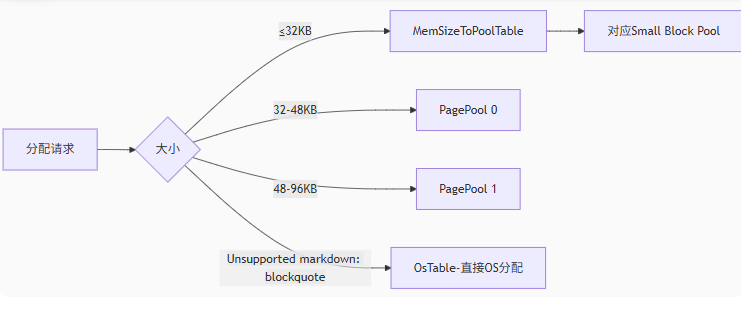
- 标准小内存池表,41 个初定大小池,从 16 B ~ 32 KB
static const uint32 BlockSizes[POOL_COUNT] =
{
    16,		32,		48,		64,		80,		96,		112,	128,
    160,	192,	224,	256,	288,	320,	384,	448,
    512,	576,	640,	704,	768,	896,	1024,	1168,
    1360,	1632,	2048,	2336,	2720,	3264,	4096,	4672,
    5456,	6544,	8192,	9360,	10912,	13104,	16384,	21840,	32768
};

for( uint32 i = 0; i < POOL_COUNT; i++ )
{
    PoolTable[i].FirstPool = nullptr;
    PoolTable[i].ExhaustedPool = nullptr;
    PoolTable[i].BlockSize = BlockSizes[i];
    check(IsAligned(BlockSizes[i], Private::DEFAULT_BINNED_ALLOCATOR_ALIGNMENT));
#if STATS
    PoolTable[i].MinRequest = PoolTable[i].BlockSize;
#endif
}
- 将所有
PoolTable和PagePoolTable都存储到MemSizeToPoolTable数组中
for( uint32 i=0; i<MAX_POOLED_ALLOCATION_SIZE; i++ )
{
    uint32 Index = 0;
    while( PoolTable[Index].BlockSize < i )
    {
        ++Index;
    }
    checkSlow(Index < POOL_COUNT);
    MemSizeToPoolTable[i] = &PoolTable[Index];
}

MemSizeToPoolTable[BinnedSizeLimit] = &PagePoolTable[0];
MemSizeToPoolTable[BinnedSizeLimit+1] = &PagePoolTable[1];
BinnedSizeLimit为 32KB
MemSizeToPoolTable 的数组长度是 MAX_POOLED_ALLOCATION_SIZE + EXTENDED_PAGE_POOL_ALLOCATION_COUNT 也就是 32KB + 1 + 2
MemSizeToPoolTable[index] 表示能够申请 index 对应字节的最小符合要求的 FPoolTable
比如 index = 4354,那么 MemSizeToPoolTable[index] 对应的 FPoolTable 的 BlockSize 就是 4672,是符合要求的 BlockSize 最小的 FPoolTable
4354 是随便敲的
也就是说,未来任何任意大小的内存,只需要将其 Size 作为索引,即通过 MemSizeToPoolTable[Size] 获取对应的 FPoolTable
Malloc 函数
通常来说 Malloc 一般用于申请内存
Size用于表示申请内存大小Alignment用于表示要求的内存对齐边界
void* FMallocBinned::Malloc(SIZE_T Size, uint32 Alignment)
约束 Size 和 Alignment 的大小
Size = FMath::Max(Size, (SIZE_T)1);
Alignment = FMath::Max<uint32>(Alignment, Private::DEFAULT_BINNED_ALLOCATOR_ALIGNMENT);
Size不可能为 0,试想如何申请不存在的东西呢?指针如何指向不存在的对象呢?
接下来就是通过 Size 获取对应的 FTableTool
根据情况,调用 Private::AllocatePoolMemory 给 Pool 分配内存空间,通过 Private::AllocateBlockFromPool 申请对象的内存空间
FPoolTable* Table = MemSizeToPoolTable[Size];
#ifdef USE_FINE_GRAIN_LOCKS
FScopeLock TableLock(&Table->CriticalSection);
#endif
Private::TrackStats(Table, (uint32)Size);
FPoolInfo* Pool = Table->FirstPool;
if( !Pool )
{
	Pool = Private::AllocatePoolMemory(*this, Table, Private::BINNED_ALLOC_POOL_SIZE/*PageSize*/, Size);
}

Free = Private::AllocateBlockFromPool(*this, Table, Pool, Alignment);
Private
class FMallocBinned : public FMalloc
{
	struct Private;
	// ....
}
可能有人纳闷,这是个什么写法?
其实这里声明了一个名为 Private 的结构体,在 .h 文件中,真正的实现是在 .cpp 文件中
这就是名为 PImlp 模式,PImpl通过一个私有的成员指针,将指针指向的类的内部实现全部隐藏
struct FMallocBinned::Private
{
	// ....
}
- 这种方法隐藏了大量实现。即使在类中将某些成员限定为
private,外界仍旧可以通过对应的setter/getter接口猜测到类的内部实现。如果使用PImpl,则只需要提供public接口即可 - 修改
PImpl不会影响类A本身,且修改发生在.cpp文件中。指针的大小是确定的,因此,发生修改是,头文件不会发生变化。这种方法可以降低编译依赖,提高编译速度
比如,如果对外封装 SDK,外界能拿到 DLL 和 .h 文件,使用 PImpl 模式可以在 .h 文件中完全隐藏属性定义和大部分函数定义,只留下对外用的接口函数
GetPoolInfo
函数的作用是如何通过一个指针,判定其所属的 FPoolInfo
static FORCEINLINE FPoolInfo* GetPoolInfo(FMallocBinned& Allocator, UPTRINT Ptr)
所谓的 UPTRINT 其实是为了表示一个地址的大小,64位还是32位,通过模板匹配 sizeof(void*) 的值,进而得到 uint32 或者 uint64
typedef SelectIntPointerType<uint32, uint64, sizeof(void*)>::TIntPointer UPTRINT;
64 位内存地址实际用到 48 位,32 位系统实际用到 32 位
UPTRINT Key       = Ptr >> Allocator.HashKeyShift;
UPTRINT Hash      = Key & (Allocator.MaxHashBuckets - 1);
UPTRINT PoolIndex = ((UPTRINT)Ptr >> Allocator.PoolBitShift) & Allocator.PoolMask;
HashKeyShift = PoolBitShift + IndirectPoolBitShift
IndirectPoolBitShift是 每页能存储的FPoolInfo数量 的对数,比如 64KB 的页能存储 2048 个FPoolInfo,得到的IndirectPoolBitShift就是 11PoolMask = ( ( 1ull << ( HashKeyShift - PoolBitShift ) ) - 1 )
假设 HashKeyShift 是 27,MaxHashBuckets 是 32,PoolBitShift 是 16,PoolMask 是 11 位
那么 64 位系统下,有效位数是 48 位,右移 27 位,得到高位 21 位作为 Key
通过 MaxHashBuckets 取 Key 的低 5 位,得到 Hash
通过右移 16 后对取低位 11 位作为 PoolIndex
综上所述,对于一个 64位系统的指针,有效位数是 48 位,对一个指针将其划分成三部分
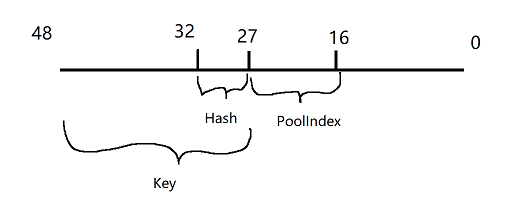
Hash有 5 位二进制,取值是 0 ~ 31PoolIndex有 11 位二进制,取值是 0 ~ 2047
PoolHashBucket* Collision = &Allocator.HashBuckets[Hash];
do
{
	if (Collision->Key == Key || !Collision->FirstPool)
	{
		if (!Collision->FirstPool)
		{
			Collision->Key = Key;
			InitializeHashBucket(Allocator, Collision);
			CA_ASSUME(Collision->FirstPool);
		}
		return &Collision->FirstPool[PoolIndex];
	}

	Collision = Collision->Next;
} while (Collision != &Allocator.HashBuckets[Hash]);
InitializeHashBucket函数中会创建FirstPool对应的FPoolInfo数组,其长度为IndirectPoolBlockSize
通过上述代码,以及前面定义的变量取值范围
不难发现 Allocator.HashBuckets 是一个长度为 32 的数组,Collision->FirstPool 是一个长度为 2048 的数组
- 通过
Hash值进行一级查找,快速定位到所属的HashBuckets - 通过
Key在链表中进行二级查找 - 通过
PoolIndex直接得到所属的FPageInfo
注意这里的 while (Collision != &Allocator.HashBuckets[Hash]) 终止循环条件是 等于链表头,这是因为 PoolHashBucket 是循环链表
从链表的插入逻辑即可窥探,Link 函数即为插入链表的逻辑,可以发现插入节点是向当前节点的前面插入
虽然函数参数是
After
void Link( PoolHashBucket* After )
{
	Link(After, Prev, this);
}

static void Link( PoolHashBucket* Node, PoolHashBucket* Before, PoolHashBucket* After )
{
	Node->Prev=Before;
	Node->Next=After;
	Before->Next=Node;
	After->Prev=Node;
}
另外,注意循环中的条件判断 !Collision->FirstPool,这里表示 PoolHashBucket 虽然被创建了,但是并没有被使用,于是乎直接修改其 Key,重新启用
当没有找到对应的 PoolHashBucket 时,则创建一个新的,并插入到 HashBuckets 数组中
PoolHashBucket* NewBucket = CreateHashBucket(Allocator);
NewBucket->Key = Key;
Allocator.HashBuckets[Hash].Link(NewBucket);
虽然当 Hash 值冲突时,通过 PoolHashBucket 链表进行逐个查找。但是游戏分配通常集中特定区域,冲突率较低,比较少见出现 O(n) 的情况
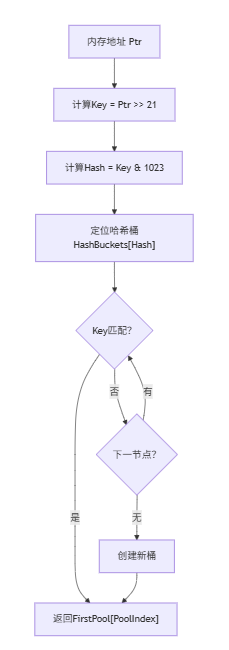
通过前面的一系列定位,可以得到一个 FPoolInfo,用于管理一个内存页的大小,这个内存页刚好是 64 KB,也就是 0~15 能表示的内容
AllocatePoolMemory
用于创建 FPoolInfo 对象
首先先申请一块 PageSize 倍数的内存
Align 就是经典的内存对齐算法,得到的值是
- 大于等于
Bytes - 是
PageSize倍数 - 同时满足上述条件的最小值
uint32 Blocks   = PoolSize / Table->BlockSize;
uint32 Bytes    = Blocks * Table->BlockSize;
UPTRINT OsBytes = Align(Bytes, PageSize);

FFreeMem* Free = (FFreeMem*)OSAlloc(Allocator, OsBytes, ActualPoolSize);
代码有些修改,大差不差
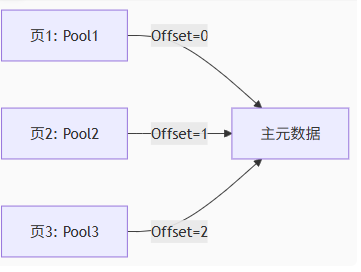
通过前面的 GetPoolInfo,通过申请的地址,创建或者获得对应的 FPoolInfo,如果一次性内存的大小超过的 BlockSize,设置对应的 PoolInfo 的 TableIndex 为 Offset 序号索引,AllocSize 和 FreeMem 为空
FPoolInfo* Pool;
{
#ifdef USE_FINE_GRAIN_LOCKS
	FScopeLock PoolInfoLock(&Allocator.AccessGuard);
#endif
	Pool = GetPoolInfo(Allocator, (UPTRINT)Free);
	for (UPTRINT i = (UPTRINT)PageSize, Offset = 0; i < OsBytes; i += PageSize, ++Offset)
	{
		FPoolInfo* TrailingPool = GetPoolInfo(Allocator, ((UPTRINT)Free) + i);
		check(TrailingPool);

		//Set trailing pools to point back to first pool
		TrailingPool->SetAllocationSizes(0, 0, (uint32)Offset, (uint32)Allocator.BinnedOSTableIndex);
	}


	BINNED_PEAK_STATCOUNTER(Allocator.OsPeak,    BINNED_ADD_STATCOUNTER(Allocator.OsCurrent,    OsBytes));
	BINNED_PEAK_STATCOUNTER(Allocator.WastePeak, BINNED_ADD_STATCOUNTER(Allocator.WasteCurrent, (OsBytes - Bytes)));
}
最后对第一个 PoolInfo 进行设置
Pool->Link( Table->FirstPool );		// 插入池链表头部
Pool->SetAllocationSizes(Bytes, OsBytes, TableIndex, Allocator.BinnedOSTableIndex);
Pool->Taken		 = 0;
Pool->FirstMem   = Free;			// 指向申请的内存
#if STATS
Table->NumActivePools++;
Table->MaxActivePools = FMath::Max(Table->MaxActivePools, Table->NumActivePools);
#endif
// Create first free item.
Free->NumFreeBlocks = Blocks;		// 包含的空闲块的数量
Free->Next          = nullptr;
NumFreeBlocks表示申请的页表个数
AllocateBlockFromPool
根据 NumFreeBlocks 和 BlockSize 可以得到内存中,可以用使用的空闲内存的地址
Pool->FirstMem 作为空闲内存的起点, --Pool->FirstMem->NumFreeBlocks * Table->BlockSize 表示内存偏移
注意,这里是 --Pool->FirstMem->NumFreeBlocks,先减少,再计算
所以,内存是从高位开始分配的
FFreeMem* Free = (FFreeMem*)((uint8*)Pool->FirstMem + --Pool->FirstMem->NumFreeBlocks * Table->BlockSize);
当当前的 FPoolInfo 已经没有空闲内存分配之后,将 FirstMem 指向链表的下一个空闲块
如果没有下一个空闲块,则将池移至 ExhaustedPool
if( !Pool->FirstMem->NumFreeBlocks )
{
	Pool->FirstMem = Pool->FirstMem->Next;
	if( !Pool->FirstMem )
	{
		// Move to exhausted list.
		Pool->Unlink();
		Pool->Link( Table->ExhaustedPool );
	}
}